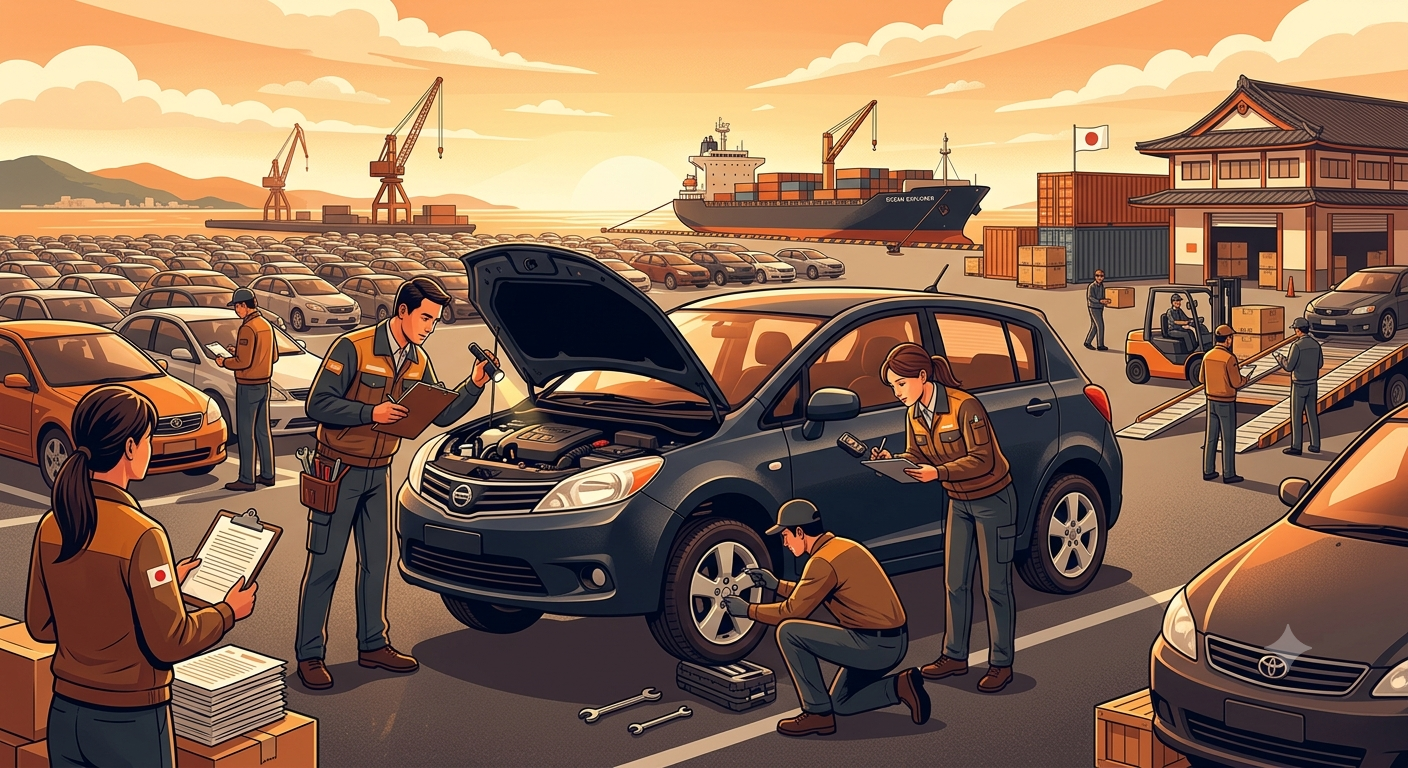
Buying a used vehicle from Japan can give Australian buyers access to hybrids, luxury cars, family vehicles, people movers and JDM performance models that may be difficult to find locally. However, the vehicle is often thousands of kilometres away when the purchase decision is made. Buyers may need to assess photographs, an auction sheet, inspection comments, vehicle documents and reports without personally seeing or driving the car. That makes a thorough used car inspection before importing from Japan one of the most important parts of the buying process. A high auction grade does not automatically mean the vehicle is mechanically perfect. A clean-looking exterior does not prove that the mileage is genuine. A translated auction sheet does not necessarily reveal every compliance, corrosion or maintenance issue. The safest approach is to examine the vehicle through several separate checks: • identity and eligibility; • auction documentation; • mileage evidence; • accident and repair history; • structural and underbody condition; • mechanical inspection; • hybrid or electric system condition; • modifications; • Australian compliance requirements; • and supporting ownership documents. Japanese auction companies such as USS inspect vehicles and record photographs and inspection findings before an auction, but the auction report should still be treated as one source of evidence rather than a complete mechanical warranty. USS states that its inspectors assess vehicles using its own grading system and enter inspection results into its database. (USS Net) Important: This article provides general buyer information. The exact vehicle, approval pathway, mechanical condition and compliance requirements should be verified before bidding, purchasing or shipping.
Quick Used Car Inspection Checklist
Before placing a bid or paying a deposit, obtain and check:
- Exact make, model and variant
- Model or chassis code
- VIN or chassis number
- Build month and year
- Original Japanese auction sheet
- Accurate auction-sheet translation
- Current vehicle photographs
- Underbody and engine-bay photographs
- Mileage evidence
- Service records where available
- Accident and repair history
- Rust and corrosion condition
- Mechanical inspection findings
- Hybrid battery diagnostic results where relevant
- Warning-light and diagnostic scan results
- Details of aftermarket modifications
- Tyre and brake condition
- Import eligibility
- SEVS and Model Report position where applicable
- Export certificate and ownership documents
- Estimated compliance and repair costs
A buyer should not assess the car from one item alone. The auction sheet, photographs, documents and physical inspection should support one another.
Why Inspect a Car Before Buying It in Japan?
The condition of the vehicle directly affects more than its purchase price.
An undisclosed problem can increase:
For example, a vehicle may look inexpensive at auction but become a poor purchase after accounting for:
The inspection should therefore answer two different questions:
- Repair costs;
- Australian compliance costs;
- Biosecurity delays;
- Registration difficulty;
- Insurance costs;
- Parts expenses;
- And the time required before the car can be sold or driven.
Structural repair;
Severe corrosion;
Hybrid battery replacement;
Missing factory equipment;
Non-compliant modifications;
Worn tyres and brakes;
Warning lights;
Or incomplete documentation.
1. Is this a good vehicle?
2. Is this the right vehicle to import into Australia?
A mechanically sound car may still be unsuitable if the exact variant is not eligible or cannot follow a practical compliance pathway.
Step 1: Verify the Exact Vehicle Identity
Begin by confirming the vehicle being inspected is the same vehicle described in the listing, auction report and supporting documents.
Collect:
The chassis or VIN shown on the vehicle should match:
Do not accept a general model description such as:
As sufficient identification.
Different versions of the same model can have different:
For SEVS vehicles, the Department of Infrastructure recommends checking that an approved Model Report exists and discussing the potential purchase with a Registered Automotive Workshop. The relevant eligibility may apply only to a particular model code or variant. (Infrastructure and Transport Department)
- Manufacturer;
- Complete model name;
- Grade or trim level;
- Chassis or model code;
- VIN or Japanese chassis number;
- Engine code;
- Transmission;
- Drivetrain;
- Body type;
- Seating capacity;
- Month and year of manufacture;
- And current odometer reading.
- The auction sheet;
- Export certificate;
- Deregistration document;
- Inspection report;
- Purchase invoice;
- And shipping documentation.
- Toyota Crown
- Honda Vezel
- Nissan Skyline
- Lexus LS
- Toyota Alphard
- Engines;
- Drivetrains;
- Safety equipment;
- Model codes;
- Build periods;
- And Australian approval requirements.
Step 2: Confirm Import Eligibility Before Inspecting for Purchase
A detailed inspection should not encourage you to buy a vehicle that cannot legally or practically be imported.
Before bidding, check:
A vehicle's entry on the SEVS Register is not itself permission to import that individual car. A separate approval and applicable compliance process may still be required. (ROVER)
The correct order is:
Not:
- Whether the exact model and variant may be imported;
- Which approval pathway applies;
- Whether the build date is eligible;
- Whether it appears on the SEVS Register where relevant;
- Whether an approved Model Report is available;
- And whether an appropriate workshop can complete the required work.
- Confirm identity
- -> Check eligibility
- -> Assess compliance pathway
- -> Inspect vehicle
- -> Calculate total cost
- -> Bid or purchase
Buy vehicle
-> Discover eligibility later
Australian Government guidance requires the relevant import approval before a road vehicle is imported. (Infrastructure and Transport Department)
Step 3: Request the Original Japanese Auction Sheet
The auction sheet is one of the most useful documents when purchasing a Japanese used car through an auction.
It may contain:
However, auction-sheet layouts and grading systems can vary between auction companies. A grade from one auction house should not automatically be treated as identical to the same grade from another.
Request:
Do not rely only on a retyped summary created by a seller.
What an auction sheet can help reveal
A properly reviewed auction sheet may identify:
What an auction sheet may not fully reveal
An auction sheet may not provide a complete diagnosis of:
Treat it as an inspection snapshot, not a long-term mechanical guarantee.
- Vehicle identity;
- Chassis or model code;
- Recorded mileage;
- Overall auction grade;
- Interior grade;
- Visible body damage;
- Repair-history indicators;
- Equipment;
- Inspector comments;
- And a body-condition diagram.
- 1. the original Japanese auction sheet;
- 2. a high-resolution copy;
- 3. a complete English translation;
- 4. confirmation of the auction company;
- 5. and proof that the chassis number matches the vehicle.
- Dents and scratches;
- Paint marks;
- Panel replacement;
- Corrosion;
- Interior wear;
- Odometer comments;
- Warning lights;
- Aftermarket parts;
- Accident-repair indicators;
- Or missing equipment.
- Engine compression;
- Transmission wear;
- Hybrid battery health;
- Intermittent electrical problems;
- Future repair requirements;
- Internal engine damage;
- Air-conditioning performance;
- Or every compliance issue relevant to Australia.
Step 4: Confirm the Auction Sheet Belongs to the Exact Car
An attractive auction sheet is useless when it belongs to a different vehicle.
Compare the chassis number on the sheet against:
Also compare:
Ask for a current photograph showing the chassis plate or permanently marked identification number.
Warning signs include:
- The chassis stamping;
- Manufacturer label;
- Export certificate;
- Current photographs;
- And purchase documentation.
- Body colour;
- Model code;
- Engine;
- Drivetrain;
- Equipment;
- Mileage;
- And visible damage.
- A blurred chassis number;
- A cropped auction sheet;
- Inconsistent model codes;
- Mileage that differs between documents;
- Vehicle photographs that do not match the damage diagram;
- And a seller unwilling to provide the original sheet.
Step 5: Understand the Auction Grade Carefully
An auction grade is a general summary of the vehicle's observed condition at the time of inspection.
It should not be used as the only buying decision.
Two vehicles with the same grade can have very different:
Pay attention to:
The notes and damage map are often more useful than the headline grade.
A higher-grade vehicle may still have:
A lower grade may sometimes result from cosmetic damage rather than serious mechanical problems. The complete report is therefore more important than the grade alone.
- Repair histories;
- Interior conditions;
- Mechanical needs;
- Corrosion levels;
- Modifications;
- And long-term ownership costs.
- Overall grade;
- Interior grade;
- Exterior condition;
- Inspector comments;
- Repair-history indicators;
- And the body diagram.
- Ageing tyres;
- Weak hybrid battery performance;
- Overdue maintenance;
- Minor corrosion;
- Warning-light history;
- Or expensive electronic faults.
Step 6: Review the Body-Condition Diagram
Japanese auction sheets commonly use letters, numbers and symbols to mark visible damage on a diagram of the vehicle.
Depending on the auction company, the markings may refer to:
Because notation systems can vary, obtain a translation that explains the symbols used by the specific auction house.
Compare each reported mark with:
Ask for additional photographs when an auction diagram shows damage that cannot be seen clearly in the listing images.
- Scratches;
- Dents;
- Paint waves;
- Panel replacement;
- Corrosion;
- Windscreen damage;
- Stone chips;
- Or other imperfections.
- High-resolution exterior photographs;
- Close-up images;
- Door gaps;
- Bonnet and boot alignment;
- Paint finish;
- And panel reflections.
Step 7: Investigate Accident and Repair History
Previous repair work does not automatically make a vehicle unsuitable, but the type and quality of repair matter.
Determine whether the car has experienced:
Request photographs of:
Signs requiring further investigation can include:
A repaired vehicle may still be usable, but the purchase price, compliance pathway and insurance implications should reflect its history.
- Cosmetic panel repair;
- Panel replacement;
- Structural damage;
- Chassis repair;
- Airbag deployment;
- Flood exposure;
- Or significant accident damage.
- Front and rear chassis rails;
- Suspension mounting points;
- Inner guards;
- Radiator support;
- Boot floor;
- Door pillars;
- Panel seams;
- Spot welds;
- And the underside.
- Uneven panel gaps;
- Mismatched paint;
- Overspray;
- Disturbed factory seams;
- New bolts on old panels;
- Inconsistent welding;
- Or crumpling around structural areas.
Step 8: Verify the Mileage
Do not treat an odometer display as proof of genuine mileage.
Mileage evidence may include:
Compare the recorded mileage with the physical wear on:
Low mileage combined with heavy interior wear requires explanation.
Also inspect the auction sheet for mileage-related marks, comments or symbols. Request a clear explanation when the sheet indicates that the mileage is:
- Auction-history records;
- Japanese service records;
- Inspection documents;
- Previous auction sheets;
- Export documents;
- Maintenance stickers;
- And odometer verification results.
- Steering wheel;
- Driver's seat;
- Pedals;
- Gear selector;
- Switches;
- Floor mats;
- And door handles.
- Uncertain;
- Replaced;
- Inconsistent;
- Or not guaranteed.
Found a Japanese vehicle you are considering? Send Elite Motor Cars the make, model, year, chassis code and budget before committing to the purchase. Request Vehicle Sourcing Browse Available Cars
Step 9: Request a Physical Mechanical Inspection
An auction sheet should be supported by a physical inspection whenever possible.
The inspector should assess:
Request a cold-start video rather than only footage recorded after the engine has warmed up.
A cold start can help reveal:
A useful inspection report should distinguish between:
Avoid reports that repeatedly use phrases such as:
Without photographs, measurements or supporting evidence.
- Engine start-up;
- Idle quality;
- Smoke;
- Unusual noises;
- Oil leaks;
- Coolant leaks;
- Transmission behaviour;
- Steering;
- Suspension;
- Brakes;
- Air conditioning;
- Warning lights;
- Exhaust;
- Tyres;
- And underbody condition.
- Timing-chain noise;
- Smoke;
- Weak battery performance;
- Rough idle;
- Or delayed warning lights.
- Verified findings;
- Suspected issues;
- Inaccessible areas;
- And items that were not tested.
- Looks fine
- Seems good
- No visible problem
- Probably okay
Step 10: Conduct a Diagnostic Scan
Modern vehicles can store fault codes even when no warning light remains visible on the dashboard.
A diagnostic scan can help identify faults involving:
Ask for:
A scan result does not replace a mechanical inspection, but it can reveal problems not visible in photographs.
- Engine management;
- Transmission;
- Airbags;
- Anti-lock braking;
- Stability control;
- Hybrid system;
- Battery management;
- Parking sensors;
- Cameras;
- And other electronic modules.
- Current fault codes;
- Stored or historical codes;
- Readiness-monitor status;
- Dashboard warning-light check;
- And evidence that codes were not simply cleared before inspection.
Step 11: Inspect Hybrid and Electric Vehicles Separately
Japanese used-car searches frequently involve hybrids and electric vehicles.
For a hybrid, check:
For an electric vehicle, investigate:
Do not judge battery condition only from:
Battery age, climate, charging history and previous usage can all affect future performance.
- High-voltage battery condition;
- Battery diagnostic results;
- State-of-health information where available;
- Battery cooling fan;
- Warning lights;
- Inverter performance;
- Charging behaviour;
- And previous battery repair or replacement.
- Battery state of health;
- Usable capacity;
- Charging-port type;
- Charging performance;
- Cell imbalance;
- Thermal-management condition;
- And Australian charging compatibility.
- Vehicle age;
- Mileage;
- Dashboard range estimate;
- Or a short test drive.
Step 12: Check for Rust, Corrosion and Flood Exposure
Rust condition is especially important for vehicles from regions that experience:
Request photographs of:
Surface rust and structural corrosion are not the same issue. The inspector should explain the location, severity and likely repair requirement.
Possible flood or water-exposure signs include:
A freshly cleaned interior should not prevent inspection beneath mats, seats and trim-accessible areas.
- Snow;
- Salted roads;
- Coastal exposure;
- Or high moisture levels.
- Suspension arms;
- Chassis rails;
- Subframes;
- Wheel arches;
- Brake lines;
- Exhaust;
- Floor pan;
- Spare-wheel well;
- Engine bay;
- And mounting points.
- Damp or musty smell;
- Corrosion under seats;
- Staining beneath carpets;
- Silt in hidden areas;
- Discoloured wiring;
- Condensation in lights;
- Rust on unusual interior components;
- And water marks inside the boot or cabin.
Step 13: Inspect the Interior and Electronic Equipment
Japanese-market vehicles can contain equipment not fitted to an equivalent Australian model.
Test:
Also verify:
Luxury and people-mover models may contain many electronic features. A small fault can become expensive when a model has limited Australian parts support.
- Electric seats;
- Seat heating and ventilation;
- Powered doors;
- Sunroof;
- Windows;
- Mirrors;
- Climate control;
- Infotainment;
- Cameras;
- Parking sensors;
- Instrument display;
- Steering controls;
- And keyless entry.
- How many keys are supplied;
- Whether a spare key is available;
- Whether the infotainment can be used in Australia;
- Whether maps and radio frequencies are compatible;
- And whether replacement electronic modules can be sourced.
Step 14: Review Aftermarket Modifications
Modifications can affect:
Check for:
Ask whether the original factory parts are included.
A modification that is acceptable in Japan may not automatically satisfy Australian standards or state registration requirements.
When importing through a pathway involving a Model Report, the vehicle must match the report's scope and complete the prescribed compliance work. (Infrastructure and Transport Department)
- Import eligibility;
- Compliance;
- Registration;
- Insurance;
- Mechanical reliability;
- And the cost of returning the car to standard condition.
- Suspension modifications;
- Aftermarket wheels;
- Exhaust systems;
- Engine tuning;
- Turbo changes;
- Body kits;
- Lighting modifications;
- Replacement seats;
- Steering wheels;
- Roll cages;
- Altered emissions equipment;
- And non-standard safety components.
Step 15: Check Tyres, Brakes and Consumable Parts
Consumable items can materially affect the immediate ownership cost.
Inspect:
Tyres can have acceptable tread but still require replacement because of age or deterioration.
Request the tyre manufacturing date codes and confirm whether the tyre size is suitable for Australian registration and replacement availability.
- Tyre age;
- Tyre tread;
- Sidewall cracking;
- Tyre brand consistency;
- Brake-pad thickness;
- Brake-disc condition;
- Fluid leaks;
- Suspension bushes;
- Engine mounts;
- Drive belts;
- Hoses;
- And the 12-volt battery.
Step 16: Consider Australian Biosecurity Requirements
Vehicle condition is not limited to mechanical and cosmetic quality.
Australia requires imported vehicles to be clean and free from biosecurity risk material. Used vehicles can be inspected internally and externally on arrival, and contamination may lead to additional cleaning, treatment, reinspection, delay or, in serious cases, export or destruction at the owner's expense. (Department of Agriculture)
Areas that should be photographed and cleaned include:
Look for:
A mechanically excellent vehicle can still create additional port costs when it arrives contaminated.
- Wheel arches;
- Underbody;
- Suspension;
- Engine bay;
- Radiator;
- Boot;
- Spare-wheel compartment;
- Beneath seats;
- Floor mats;
- Door seals;
- Vents;
- And small cavities.
- Soil;
- Leaves;
- Seeds;
- Insects;
- Animal material;
- Mud;
- Or organic debris.
Step 17: Verify the Documents
Before purchase, request the documents relevant to the proposed vehicle and transaction.
These may include:
Check that the vehicle description is consistent across every document.
Confirm:
Documentation discrepancies should be resolved before payment or shipping.
- Original auction sheet;
- Auction-sheet translation;
- Japanese export certificate;
- Deregistration document;
- Purchase invoice;
- Ownership evidence;
- Inspection report;
- Service history;
- Mileage evidence;
- Vehicle photographs;
- And modification details.
- Chassis number;
- Make;
- Model;
- Model code;
- Engine;
- Build date;
- Mileage;
- Colour;
- And seller information.
Step 18: Check an Already Imported Vehicle in Australia
When the car is already in Australia, the inspection process changes slightly.
In addition to condition and history, verify:
The public Register of Approved Vehicles can be searched using the permanently marked VIN. (ROVER)
A PPSR search can also help identify whether an Australian vehicle is recorded with a security interest and may show stolen or written-off information. The PPSR recommends searching using the VIN or chassis number close to the time of purchase. (Personal Property Securities Register)
The RAV and PPSR serve different purposes:
None of these checks should be treated as a complete substitute for the others.
- Import approval;
- RAV status;
- Compliance documents;
- Registration status;
- Ownership;
- Warranty terms;
- And whether the advertised price is drive-away.
Check
What it helps verify
RAV search
Road Vehicle Standards approval record
PPSR search
Security interest and available stolen/written-off information
Physical inspection
Actual mechanical and cosmetic condition
Service documents
Maintenance history where available
Registration check
Current Australian registration information
Questions to Ask the Vehicle Inspector
Send the inspector a written checklist rather than asking only, “Is the car good?”
Ask:
- 1. Does the chassis number match every document?
- 2. Is the auction sheet original and vehicle-specific?
- 3. Are there signs of structural repair?
- 4. Are any panels replaced?
- 5. Is there rust underneath the vehicle?
- 6. Are there signs of flood or water exposure?
- 7. Does the engine start correctly when cold?
- 8. Are there oil or coolant leaks?
- 9. Are any warning lights active?
- 10. What diagnostic fault codes are present?
- 11. Does the transmission operate normally?
- 12. What is the condition of the tyres and brakes?
- 13. Are any aftermarket modifications fitted?
- 14. Are the factory parts available?
- 15. Does the recorded mileage appear consistent?
- 16. Are there unusual noises or vibrations?
- 17. Does every electronic feature work?
- 18. Is the vehicle clean enough for export preparation?
- 19. Is additional inspection recommended?
- 20. Which areas could not be inspected?
Ask for photographs or videos supporting each significant answer.
Major Red Flags Before Importing
Pause the purchase when you find:
A rare model or attractive price should not override unresolved documentation and condition problems.
- Chassis numbers that do not match;
- No original auction sheet;
- An unreadable or cropped report;
- Unexplained mileage differences;
- Missing export documents;
- Structural repair not reflected in the price;
- Severe underbody corrosion;
- Flood indicators;
- Active airbag or safety-system faults;
- Engine or transmission warning codes;
- Extensive modifications;
- Missing emissions equipment;
- Seller pressure to pay immediately;
- Refusal to provide additional photographs;
- Or uncertainty about import eligibility.
Available Imported Stock vs Custom Sourcing
Australian buyers can generally choose between:
Buying an imported car already available in Australia
This may offer:
Asking for a car to be sourced from Japan
This may offer:
Custom sourcing requires a disciplined pre-purchase process because the exact vehicle must be assessed before bidding.
A good sourcing decision combines:
- Faster delivery;
- Local physical inspection;
- Clearer final pricing;
- Completed or advanced compliance;
- And less exposure to overseas purchasing risk.
- Broader model choice;
- Preferred colour or specification;
- Target mileage;
- Selected condition;
- And access to variants not currently available locally.
- Eligibility
- + inspection
- + documentation
- + compliance
- + landed cost
- = informed purchase decision
How Elite Motor Cars Can Support the Buying Process
Elite Motor Cars imports and sells selected new and used vehicles from Japan. Buyers can review vehicles already available in Australia or provide the team with a required model, year, specification and budget for custom sourcing. (elitemotorcars.com.au)
When submitting a sourcing request, provide:
Also state whether your priority is:
This helps avoid searching for vehicles that technically match the model name but fail to match the buyer's real requirements.
- Make and model;
- Exact variant where known;
- Preferred year;
- Maximum mileage;
- Colour;
- Required features;
- Acceptable repair history;
- Budget;
- And delivery location.
- Lowest total cost;
- Best condition;
- Lowest mileage;
- Specific specification;
- Rare model;
- Or faster delivery.
Frequently Asked Questions
Is a Japanese auction sheet enough to assess a car?
No. It is an important source of condition information, but it should be reviewed together with current photographs, chassis verification, service records, mileage evidence, diagnostic results and a physical inspection.
Can auction-sheet grades differ between auction houses?
Yes. Auction houses can use different report layouts and grading methods. Review the specific auction company’s notes, damage diagram and inspector comments rather than relying only on the headline grade.
How can I verify a Japanese car’s mileage?
Compare the auction sheet, auction-history records, service documents, export records, inspection results and physical wear. Any inconsistency should be investigated before purchase.
What does an accident-history auction grade mean?
It can indicate that the vehicle has undergone previous repair, but the nature and severity of the repair must still be assessed. Request structural-area photographs and a physical inspection.
Should I import a car with previous repairs?
That depends on the repair type, quality, price, compliance implications and intended use. Cosmetic repair is different from structural damage. Obtain professional findings before deciding.
How do I inspect a hybrid vehicle from Japan?
Request a hybrid-system diagnostic scan, battery condition information, warning-code history, cooling-system inspection and confirmation of any previous battery repair or replacement.
Does a high auction grade guarantee no mechanical problems?
No. Auction grades are condition summaries and do not guarantee long-term mechanical reliability or eliminate the need for a separate inspection.
Should I check SEVS before buying the vehicle?
Yes, where the proposed pathway relies on SEVS. Confirm the exact variant, build date and Model Report position. SEVS listing alone is not an individual import approval. (ROVER)
Can I check an imported vehicle on the RAV?
Yes. The public RAV search uses the vehicle’s permanently marked VIN. (ROVER)
Should I perform a PPSR search on an imported car already in Australia?
It is a useful additional check. A PPSR search may show a registered security interest and available stolen or written-off information. It does not replace a physical inspection or RAV check. (Personal Property Securities Register)
What happens when an imported vehicle is dirty?
Australian biosecurity authorities may require inspection, cleaning, treatment or reinspection. Severe contamination can create significant delays and costs. (Department of Agriculture)
Discuss Your Vehicle Requirements Browse available imported cars or request a specific vehicle from Japan. Browse Available Imported Cars
Final Pre-Purchase Inspection Checklist
Before authorising a bid or purchase, confirm:
- VEHICLE IDENTITY
- Chassis/VIN matches every document
- Exact model and variant verified
- Build month and year verified
- Engine and drivetrain verified
- IMPORT POSITION
- Vehicle eligibility checked
- Approval pathway identified
- SEVS position checked where relevant
- Model Report checked where required
- Compliance costs considered
- AUCTION AND HISTORY
- Original auction sheet received
- Complete translation received
- Auction history reviewed
- Mileage evidence checked
- Repair history understood
- PHYSICAL CONDITION
- Cold-start video reviewed
- Engine and transmission assessed
- Diagnostic scan completed
- Underbody inspected
- Rust and flood signs checked
- Tyres and brakes assessed
- Interior and electronics tested
- Hybrid/EV battery checked where applicable
- DOCUMENTS
- Export certificate received
- Purchase details confirmed
- Chassis number consistent
- Service records reviewed
- Modification list obtained
- TOTAL DECISION
- Repair estimate prepared
- Compliance estimate prepared
- Full landed cost calculated
- Insurance availability checked
- Parts availability considered
- Written inspection report received
Looking for a Japanese Imported Vehicle?
Elite Motor Cars gives buyers two routes: • browse imported vehicles already available for sale in Australia; • or request a specific new or used vehicle to be sourced from Japan. Browse Available Imported Cars
Contact details
Phone: +61 466 318 074
Email: sales@elitemotorcars.com.au
Location: Sydney, NSW, Australia
Dealer Licence: MD100405
Final Thoughts
A careful used car inspection before importing from Japan protects the buyer from more than cosmetic problems. It helps identify: • incorrect vehicle details; • auction-sheet inconsistencies; • hidden repairs; • mileage concerns; • corrosion; • mechanical faults; • hybrid battery problems; • non-compliant modifications; • and documentation risks. The strongest buying decision is not based only on the lowest auction price or highest grade. It is based on: 1. the exact vehicle’s eligibility; 2. verifiable identity and documentation; 3. independent condition evidence; 4. realistic compliance requirements; 5. and the complete landed and ownership cost.